

Your phone hits 3% battery at the airport gate. Your gaming session cuts out mid-match on the train. Your smartwatch dies before you reach the hotel. These are not minor inconveniences — they are the daily realities that make a reliable portable charger one of the most practical pieces of tech you can carry. Yet most people buy the wrong one: too bulky, too slow, or simply not compatible with their devices. This guide covers every step of the selection process, from understanding core specifications to navigating airline regulations, so you can make a confident, informed choice.
Table of Contents
- What to consider before buying a compact portable charger
- Step-by-step: How to pick the most suitable charger for your needs
- Safety tips and travel compliance for portable chargers
- Troubleshooting and common mistakes when choosing or using a compact charger
- Why most power bank buying guides miss the real-world experience
- Explore more charging solutions tailored for your needs
- Frequently asked questions
Key Takeaways
| Point | Details |
|---|---|
| 10,000 mAh is ideal | Most tech-savvy travellers benefit from compact 10,000 mAh chargers with USB-C Power Delivery. |
| Check real-world performance | Look for tested efficiency and thermal throttling data—not just advertised speed. |
| Airline safety matters | Always carry your power bank in hand baggage and obey watt-hour limits for travel. |
| Multi-device charging can slow output | Charging multiple devices may reduce wattage per port, so prioritise single-device speed. |
| Focus on pocketability | Consider both physical size and weight for daily carry, not just battery capacity. |
What to consider before buying a compact portable charger
Before comparing models, it helps to establish clear requirements. A charger that works brilliantly for a solo commuter may be entirely unsuitable for a traveller carrying three devices. Getting the fundamentals right saves both money and frustration.
Capacity: the 10,000 mAh benchmark
Capacity is measured in milliampere-hours (mAh). A higher number means more stored energy. For most users, 10,000 mAh is the compact standard that balances pocketability and charging ability — it can fully charge a typical smartphone two to three times before needing a recharge itself. Going smaller, such as 5,000 mAh, suits ultra-light travellers who only need a single emergency top-up. Going larger, such as 20,000 mAh, adds significant weight and may exceed airline carry-on limits.
If you carry a tablet, a gaming handheld, or multiple phones, consider a large capacity power bank that can sustain multi-device sessions without running flat too quickly.
USB-C and Power Delivery explained
Power Delivery (PD) is a fast-charging standard that uses the USB-C port to negotiate higher voltages and currents between the charger and the device. In plain terms, it charges your phone faster than a standard USB-A port. For newer smartphones, tablets, and laptops, USB-C PD is not optional — it is the difference between a 30-minute top-up and a two-hour wait.
A mini magnetic power bank with USB-C PD can be a practical everyday carry option for single-device users who prioritise size over raw capacity.
Everyday carry requirements
| Feature | Acceptable range | Why it matters |
|---|---|---|
| Weight | Under 200 g for 10,000 mAh | Heavier units cause bag fatigue |
| Dimensions | Roughly credit-card width | Fits jacket pockets and belt pouches |
| Port count | 2 to 3 ports minimum | Supports multi-device charging |
| Cable type | Built-in or universal | Reduces cable clutter |
| Output wattage | 18 W to 45 W | Determines charging speed |
Key considerations before purchasing:
- Pocketability. A charger that stays in your bag is one you will use. Aim for units that fit in a standard trouser or jacket pocket.
- Cable management. Built-in cables remove the need to carry extras. Retractable designs are particularly practical.
- Multi-device speed. When two devices charge simultaneously, output is split. A 45 W unit may drop to 22 W per port when both ports are active.
- Pass-through charging. Some units allow you to charge the bank and a device at the same time, which is useful when wall outlets are scarce.
Step-by-step: How to pick the most suitable charger for your needs
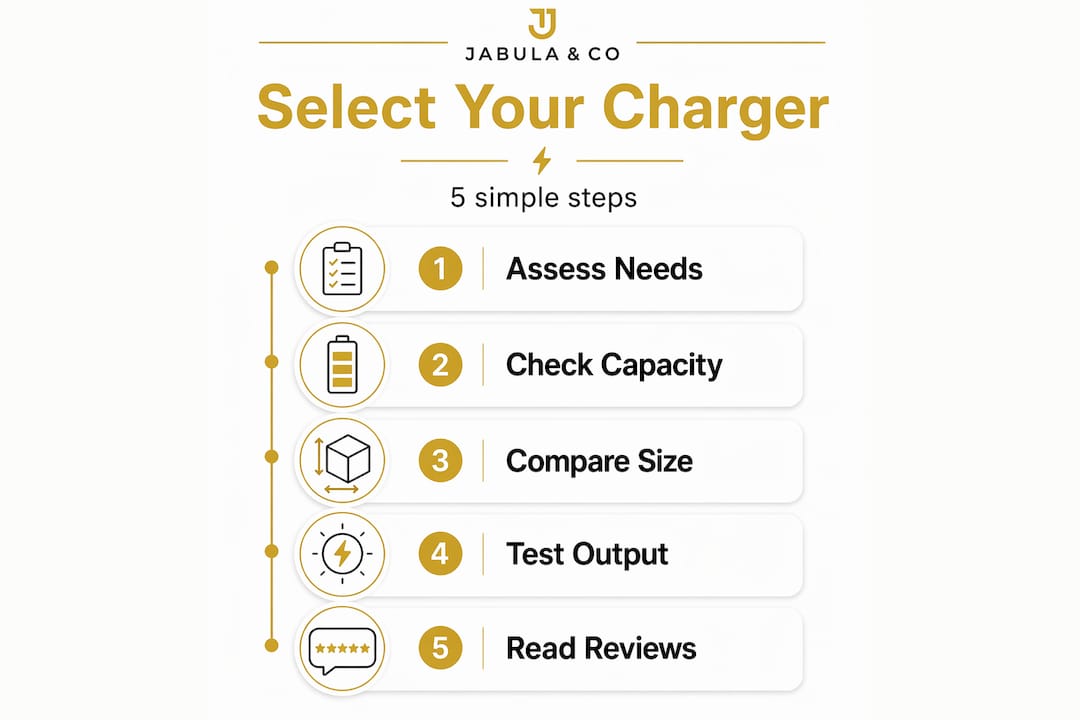
With the criteria established, the next step is a structured evaluation process. This prevents impulse buying based on packaging claims and ensures the charger genuinely matches your lifestyle.
Step 1: Assess your actual usage
Count the devices you charge daily. A commuter with one phone needs a different solution than a traveller carrying a phone, tablet, and wireless earbuds. Single-device users can prioritise slimness and weight. Multi-device users should prioritise port count and total wattage output.
Step 2: Compare slimness, weight, and charging speed with real numbers
The INUI Pocket Rocket P50 is one of the smallest 10,000 mAh options available, delivering up to 45 W and showing strong real-world efficiency results in independent testing. It demonstrates that compact size does not always mean compromised performance, though thermal behaviour under sustained load remains a variable to watch.
Step 3: Review efficiency and thermal throttling test results
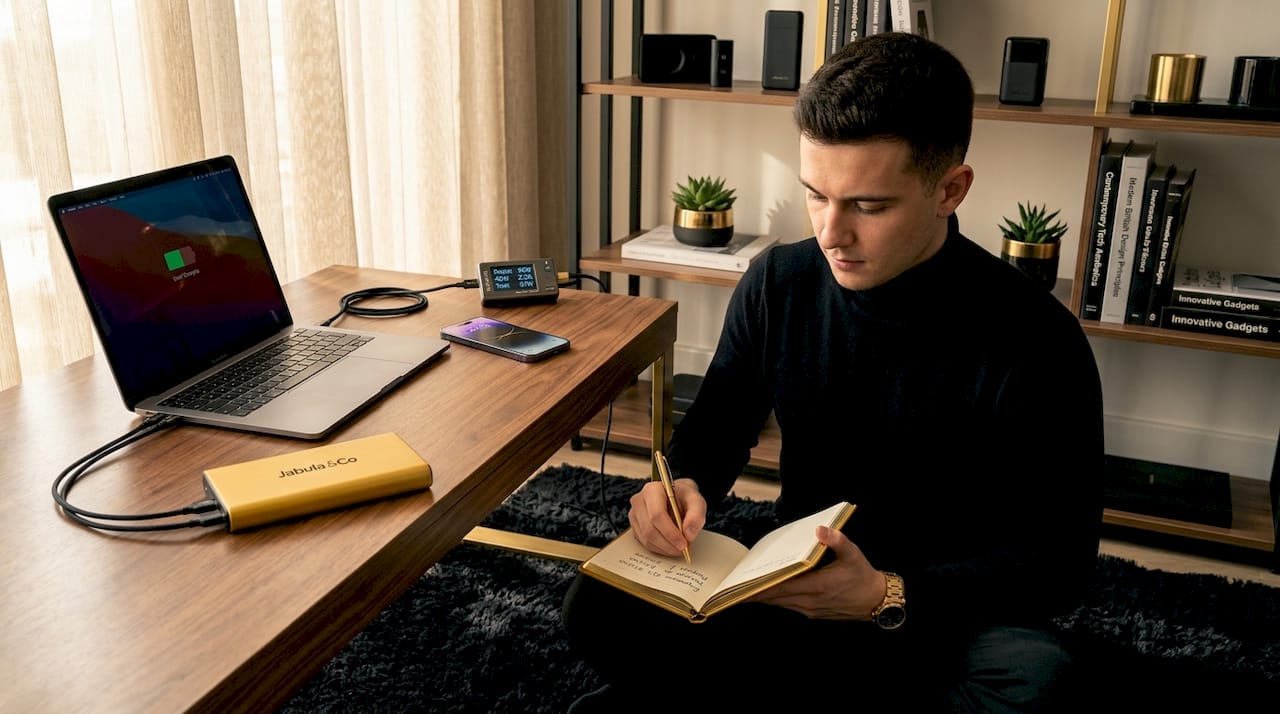
Efficiency refers to how much stored energy actually reaches your device versus how much is lost as heat. A power bank rated at 10,000 mAh may only deliver 6,500 to 7,000 mAh in practice due to conversion losses. Thermal throttling occurs when a charger reduces its output wattage to prevent overheating. This is normal, but units that throttle aggressively will charge more slowly than their advertised maximum suggests.
Step 4: Check cable types and built-in versus external options
A retractable USB cable that supports multiple connector types (USB-C, Micro-USB, Lightning) reduces the need to carry separate cables. If your power bank has a built-in cable, confirm it matches your primary device’s port before purchasing.
Step 5: Read independent test reviews, not just product listings
The Anker Nano Power Bank offers high-watt multi-device charging for travel use and consistently performs well in independent evaluations. Prioritise sources that publish actual watt-hour efficiency figures and temperature readings over sources that simply list advertised specs.
| Model type | Capacity | Max output | Best for |
|---|---|---|---|
| Ultra-slim 5,000 mAh | 5,000 mAh | 20 W | Single device, daily commute |
| Standard 10,000 mAh | 10,000 mAh | 45 W | Travel, multi-device |
| Wireless magnetic | 5,000 mAh | 15 W wireless | MagSafe-compatible phones |
| High-capacity 20,000 mAh | 20,000 mAh | 65 W | Long-haul travel, laptops |
A wireless charging power bank is worth considering if your phone supports wireless charging, as it removes the need for cables entirely during short top-ups.
Pro Tip: Before finalising your purchase, check whether the power bank supports pass-through charging. This feature lets you charge the bank via a wall outlet while simultaneously topping up a connected device, which is extremely useful in airports with limited sockets.
Safety tips and travel compliance for portable chargers
Knowing which charger to buy is only part of the process. Using it safely, and ensuring it complies with airline regulations, protects both you and other passengers.
Airline carry-on rules
Power banks are allowed in carry-on baggage only, subject to watt-hour (Wh) limits. They are strictly forbidden in checked baggage because lithium-ion batteries pose a fire risk in the cargo hold where fires cannot be easily detected or suppressed.
“Spare batteries and power banks are not permitted in checked baggage under any circumstances. They must be carried in the cabin, where any thermal event can be immediately addressed by crew.”
The standard airline limit is 100 Wh per battery without prior approval. Units between 100 Wh and 160 Wh require airline approval. Anything above 160 Wh is generally prohibited on commercial flights.
To calculate watt-hours from mAh: divide the mAh rating by 1,000 and multiply by the voltage (typically 3.7 V). A 10,000 mAh power bank at 3.7 V equals 37 Wh, well within limits. A 27,000 mAh unit at 3.7 V equals approximately 100 Wh, right at the threshold.
Practical do’s and don’ts for airport security
- Do remove your power bank from your bag during security screening.
- Do keep it in your carry-on, not your checked luggage.
- Do check the Wh rating printed on the unit before travelling.
- Don’t carry power banks with damaged casing or swollen cells.
- Don’t charge your power bank via a laptop USB port on a plane without checking the airline’s policy.
- Don’t leave a charging power bank unattended in a confined space.
What to do if your power bank overheats
Stop use immediately. Do not place it in your bag. If you are on a flight, notify cabin crew straight away. Signs of a failing lithium-ion cell include unusual heat, swelling, hissing, or a chemical smell. A mini power bank travel option with a quality battery management system (BMS) reduces the risk of thermal events by regulating charge and discharge cycles automatically.
Troubleshooting and common mistakes when choosing or using a compact charger
Even after careful research, users frequently encounter problems that stem from avoidable errors. Understanding these pitfalls in advance saves time and protects your devices.
Mistake 1: Trusting advertised wattage without checking real-world results
Manufacturers list maximum output under ideal conditions. Real-world thermal throttling and efficiency losses mean the actual charging speed is often lower than the stated maximum. Always look for independent test data that includes temperature readings and sustained output measurements, not just peak figures.
Mistake 2: Ignoring multi-device output splitting
A 45 W power bank does not deliver 45 W to each port simultaneously. When two ports are active, the total wattage is shared. A unit might deliver 30 W to one port and 15 W to the other, or split evenly at 22.5 W each. Check the product specifications for per-port output when multiple ports are in use.
Mistake 3: Cable type mismatches
Using a Micro-USB cable with a USB-C device, or using a USB-A to USB-C cable that does not support high-wattage charging, will cap your charging speed regardless of the power bank’s capability. A fast charging cable rated for the wattage your power bank outputs is essential for achieving the speeds you paid for.
Mistake 4: Overlooking thermal behaviour in compact designs
Smaller power banks have less surface area to dissipate heat. Under sustained load, such as charging a tablet for several hours, a compact unit may throttle more aggressively than a larger model. This is not a defect — it is a design trade-off. If sustained high-speed charging is a priority, a multi-device charging station may be more appropriate for home or hotel use, with the compact bank reserved for short top-ups on the go.
Mistake 5: Ignoring battery management system quality
Not all BMS implementations are equal. A quality BMS protects against overcharge, over-discharge, short circuits, and excessive temperature. Budget units with poor BMS can damage connected devices or degrade rapidly after a few charge cycles.
Pro Tip: Charge your power bank to around 80% for long-term storage rather than keeping it at 100%. Lithium-ion cells stored at full charge degrade faster over time, reducing the total capacity available after six to twelve months of regular use.
Why most power bank buying guides miss the real-world experience
Most buying guides rank chargers by peak wattage and mAh capacity. These are useful starting points, but they miss the factors that actually determine whether a charger works well in daily use.
True pocketability is subjective. A charger that measures well on paper may feel awkward in a jacket pocket or create an uncomfortable bulge in a trouser pocket. Weight distribution matters too — a dense 150 g unit can feel heavier than its spec sheet suggests when carried all day.
Charging feel is another overlooked factor. How quickly does the unit respond when you plug in? Does it start charging immediately or take several seconds to negotiate the protocol? Does it stay cool to the touch during a 30-minute session, or does it become noticeably warm? These are questions that only hands-on use or detailed independent testing can answer.
Small power banks may throttle under sustained load, and real-world thermal behaviour is one of the most reliable predictors of true charging speed over time. A charger that delivers 40 W for the first five minutes before dropping to 20 W is functionally slower than a charger that sustains 30 W consistently.
Brand prestige is not a substitute for test data. Some well-known brands produce units that underperform relative to their price. Equally, lesser-known brands sometimes produce excellent, well-tested products that offer better value. The mini magnetic power bank category, for example, has seen significant quality improvements from newer manufacturers that prioritise thermal management and build quality over marketing spend.
The practical advice here is straightforward: prioritise test data over brand loyalty, prioritise sustained output over peak figures, and prioritise genuine pocketability over theoretical dimensions listed in a product description.
Explore more charging solutions tailored for your needs
At Jabula & Co, we curate portable charging accessories specifically for travellers, gamers, and everyday commuters who need reliable, compact power on the go. Whether you need a sleek wireless charging bank for cable-free top-ups, a super fast charging cable that matches your power bank’s full output, or a compact mini power bank designed for daily carry, our range covers the full spectrum of portable charging needs.

Every product in our charging range is selected for performance, build quality, and travel compliance. We offer worldwide shipping, secure payments, and a product selection that prioritises practical value over inflated marketing claims. Browse our charging accessories to find the right combination of capacity, speed, and portability for your specific setup.
Frequently asked questions
What is the ideal power bank capacity for frequent travellers?
A 10,000 mAh power bank with USB-C PD is the optimal choice for frequent travellers, offering enough capacity for two to three full phone charges while remaining compact and airline-compliant.
Can I bring a portable charger on a plane?
Yes, power banks are permitted in carry-on baggage within watt-hour limits, but airline rules prohibit power banks in checked luggage under any circumstances due to lithium-ion fire risk.
How important is USB-C Power Delivery for a compact charger?
USB-C PD significantly reduces charging time for compatible devices and is considered essential for faster, future-proof charging across newer smartphones, tablets, and accessories.
Why do some compact power banks charge slower than advertised?
Compact chargers often experience thermal throttling under sustained load, and splitting output across multiple ports reduces per-port speed, both of which lower real-world performance below the stated maximum.
What should I do if my power bank overheats?
Stop use immediately, keep the unit with you rather than placing it in a bag, and if you are on a flight, notify cabin crew straight away as thermal events with lithium-ion batteries require immediate attention from trained staff.